Department of Agronomy

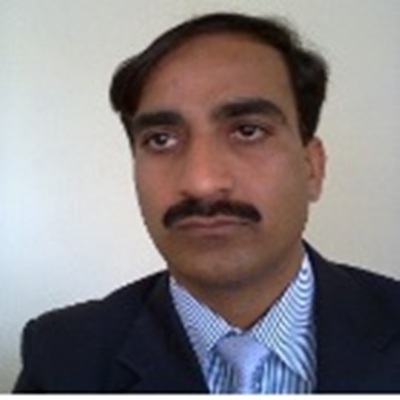
Dr. Ghulam Qadir

Chairman

Ph.D & Post-Doc

Phone: +92-51-4426318

Email: [email protected]

Dr. Ghulam Qadir

About Department

The concept of scientific farming in the rainfed areas is a recent phenomenon. Particularly, the concept of farming on commercial scale in this area has always been both uncertain and risky. Focus, before and after partition, therefore continued on irrigated agriculture. When the irrigated areas failed to produce the food requirements of the ever growing population of the country, the Barani areas were looked upon as possible alternative of establishing the Punjab Barani Commission in 1975 to examine the possibilities of exploring the rich resources of the rainfed areas.

It was on the recommendation of this Commission that the Government of the Punjab established Barani Agricultural College during 1980. Agronomy is one of the disciplines which was offered as major subject with the establishment of college. . The college established itself to be one of the best institutions with regard to its academic programmes, discipline on campus and contribution of its faculty. The college gained national as well as international reputation.

Barani College not only withstood all adversaries and hazards but attained the level of excellence to become a university during 1994. The University of Arid Agriculture, Rawalpindi ordinance was promulgated by the Governor of Punjab in December 1994 while the University Act was passed by the Punjab provincial Assembly in May 1995 and University initiated its first academe program from October 1995. Since the establishment of university, agronomy department is heavily involved in teaching and research dealing with areas such as dryland cropping systems, stress physiology, genetic transformation of crops, biological nitrogen fixation, water use efficiency, integrated weed management, seed production and technology, plant nutrition, intercropping and simulation modeling with the following objectives.

  1. To produce properly trained manpower with great emphasis on dryland agriculture.
  2. To undertake appropriate applied research and the creation of site-specific improved technology in order to bridge the income gap between the irrigated and rainfed areas.
  3. To establish effective linkage between education, research and extension for proper transfer of improved technology to the farming community.

Agronomy department offers B.Sc, M.Sc. and Ph.D. degree programmes with major emphasis in dryland crop production. At present, the department comprises 13 faculty members who are highly qualified and majority of them hold Ph.D. degrees and are well recognized for excellence in both basic and applied research in the area of their interest.

So far, this department has produced 426 and 130 undergraduate and postgraduate students respectively.Most of the graduates produced by this department are serving in government departments and private organizations of the country. Some of them have proceeded abroad for higher studies. Reports of their performance from their employers is very encouraging. Similarly, research work of members of agronomy faculty has been published in journals of national and international repute.

Faculty Members

Degree Programs

M.Sc (Hons.) Agronomy

Eligibility
B.Sc (Hons.) Agriculture in the relevant subject with CGPA of at least 2.50/4.00. Must have passed University Entrance Test.

Ph.D Agronomy

Eligibility
M.Sc (Hons.) Agriculture with CGPA of at least 3.00/4.00 in the relevant discipline. Must have passed University GRE Type Subject Test with 70% marks. The Ph.D applications must be accompanied by comprehensive project proposals alongwith consent letter from concerned supervisor with justification of resources.

Research

S. NoTitle of Research ProjectName of P I
1.Optimization of Agro-Management Techniques for Sinapis albaProf. Dr. Fayyaz-ul-Hassan
2.Soybean Based Double Cropping System for Rainfed Areas of PakistanDr. Muhammad Ansar, (Associate Professor)
3.Productivity Enhancement of Drought Tolerant and Shattering Resistant Cultivars of Sesame in Rainfed Areas of Punjab PakistanDr. Ghulam Qadir, (Associate Professor)
4.Comparison of Carbon Sequestration in Different Cropping System of the PunjabDr. Irfan Aziz, (Associate Professor)
5.Improving Drought Tolerance and Quality of Fodder Maize Genotypes for Silage using Growth Hormone and SeleniumDr. Muhammad Rasheed, (Associate Professor)
6.Evaluation of Rapeseed (canola) Germplasm for Erucic Acid Content Based on the Presence and Expression of GenesDr. Abdul Manaf, (Assistant Professor)
7.Modeling Rainfed Cereal-Based Cropping Systems to Climatic ExtremesDr. Mukhtar Ahmad, (Assistant Professor)
8.Adaptability and development of Production Technology of Guar (Cyamopsis tetragonoloba (L.) Taub) in Rainfed Pothwar through Simulation Modeling-Do-
9.Modeling approach for assessing the impact of climate change on growth and yield of wheat and groundnut and possible adaptation/ management strategies under rainfed conditionDr. Muhammad Naveed Tahir
10.GNSS-RTK based precision Remote Sensing spraying technology and application. Guangzhou Science Technology and Innovation Commission, China-Do-
11.Perspective Study of using Weeds Nano Material for the Management of Weeds, Tolerance of Drought and Improvement of Productivity in WheatDr. Safdar Ali (Assistant Professor)
    1. Sustainable Cropping patterns in Pothwar Plateau: (Principal Investigator.Prof. Dr. Shahbaz Ahmad)
    2. Integrated weed control in Rabi crops (wheat & Rapeseed) and fallow land in Pothwar: 
      (Principal Investigator, Prof. Dr. Muhammad Azim Malik)
    3. Evaluation of high yielding and drought resistant canola cultivars in Pothwar 
      (Principal Investigator: Prof.  Dr. Fayyaz-ul-Hassan).
    4. Development of implanta transformation system for wheat .
      (Principal Investigator: Dr. Abdul Razzaq)
    5. Allelopathic Crop Residue Use For Weed Management in Rainfed Areas of Punjab.
      Principal Investigator: Prof. (Retd.) Dr. Muhammad Ashraf)
    6. Phenotypic plasticity of Safflower (Carthamus tinctorius) in response to environment and integrated nutrient management.
      (Principal Investigator: Prof. Dr. Fayyaz-ul-Hassan)

So far, this department has produced 426 undergraduate and 130 postgraduate students respectively.

  1.  
  1.  
  1.  

List of Instruments